Announcements
Announcements
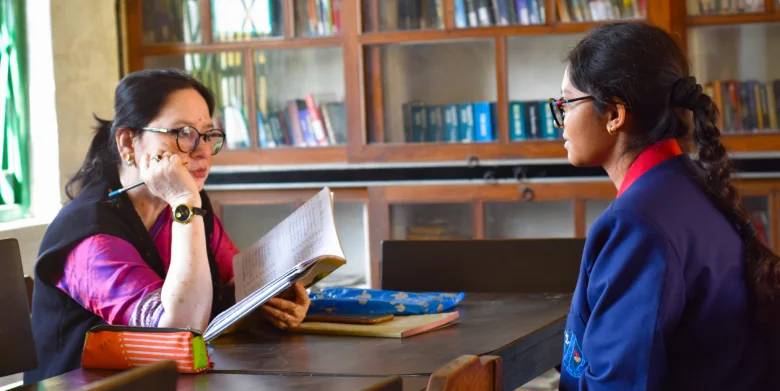
The National Education Policy (NEP) 2020 marks a transformative shift in India's education system, aiming to make learning more holistic, flexible, skill-oriented and future-ready. Designed to move beyond rote memorisation, NEP 2020 focuses on nurturing critical thinking, creativity and lifelong learning - qualities essential for students growing up in the 21st century.
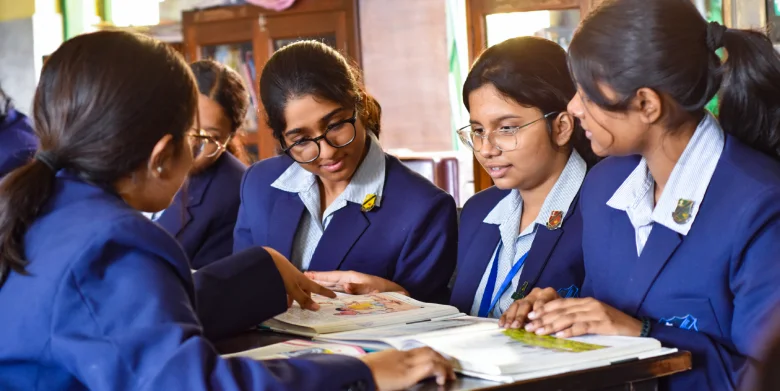
At St. Paul's Boarding & Day School, Kolkata, an ICSE-affiliated girls' school, the principles of NEP 2020 align naturally with the school's long-standing commitment to academic excellence, holistic development and value-based education.
NEP 2020 replaces the traditional, exam-centric model with a learner-focused approach that prioritises conceptual understanding, experiential learning and interdisciplinary education. It introduces structural reforms, modern pedagogy and a renewed emphasis on ethics, creativity and well-being.
The policy aims to equip students with the knowledge and skills required not only for higher education and employment, but also for responsible citizenship and lifelong success.
NEP 2020 moves away from rigid subject boundaries and promotes a multidisciplinary approach to learning, where students are encouraged to explore sciences, humanities, arts, sports and vocational skills alongside core academics. This approach helps learners discover their interests and strengths early, fosters creativity and nurtures well-rounded personalities. By integrating diverse disciplines, students develop broader perspectives, adaptability and the ability to connect knowledge across subjects - essential skills for the modern world.
A defining feature of NEP 2020 is its strong emphasis on conceptual understanding rather than rote memorisation. Students learn through hands-on activities, experiments, projects, discussions and real-life applications of knowledge. This experiential approach enhances comprehension, retention and curiosity, enabling students to understand not just what they learn, but why and how concepts are applied. Learning becomes meaningful, engaging and relevant to everyday life.
NEP 2020 introduces competency-based assessments that evaluate a student's understanding, skills and ability to apply knowledge, rather than memorised content alone. Continuous and formative assessments replace high-pressure, exam-centric systems, offering regular feedback and opportunities for improvement. This method reduces stress, encourages self-reflection and helps teachers support individual learning needs more effectively.
Strong foundations in reading, writing and numeracy form the backbone of lifelong learning. NEP 2020 prioritises foundational literacy and numeracy in the early years of schooling, ensuring that students develop essential language and mathematical skills with confidence. A solid foundation enables learners to progress smoothly through higher classes, grasp complex concepts and build academic independence.
NEP 2020 recognises that education must nurture both intellect and character. The policy places significant emphasis on value education, ethics, emotional well-being, physical health and mental wellness. Schools are encouraged to create supportive environments where students feel safe, respected and motivated. By fostering empathy, resilience, discipline and social responsibility, NEP 2020 helps shape balanced individuals prepared to face personal and societal challenges.
Rather than passive learning, NEP 2020 encourages students to question, analyse and think independently. Classroom practices promote inquiry-based learning, logical reasoning and problem-solving, enabling students to evaluate information, form opinions and make informed decisions. These skills are essential for higher education, professional success and responsible citizenship in an ever-changing world.
NEP 2020 highlights the importance of technology integration in education. Students are introduced to digital tools, online resources and responsible technology usage, preparing them for a technology-driven future. Digital literacy enhances access to information, supports personalised learning and equips students with essential skills for higher education and modern careers.
The policy offers greater flexibility in subject choices, allowing students to pursue their interests and aptitudes without rigid academic streams at early stages. This flexibility supports personalised learning journeys and reduces academic pressure, helping students make informed decisions about their future education and career paths.
At St. Paul's Boarding & Day School, Kolkata, the principles of NEP 2020 are seamlessly integrated into everyday teaching and learning practices. The school follows concept-driven teaching methodologies supported by experiential and activity-based learning, ensuring that students develop a deep understanding and practical application of knowledge.
A balanced focus on academics and co-curricular activities promotes all-round development, while continuous assessment and personalised student mentoring provide consistent guidance and support. Rooted in value-based education and character formation, St. Paul's, as a girls' ICSE and ISC school, offers a nurturing environment where young girls are encouraged to think independently, express themselves with confidence and grow holistically.
The National Education Policy 2020 represents a powerful step towards building an education system that is inclusive, flexible and forward-looking. By focusing on conceptual understanding, holistic development and real-world skills, NEP 2020 benefits school students at every stage of learning. At St. Paul's Boarding & Day School, these principles strengthen the school's mission to educate, empower and inspire young girls, preparing them not just for examinations, but for life beyond the classroom.
3rd April, 2026
27th March, 2026
23rd February, 2026
16th February, 2026
6th February, 2026